
Special Report: The Contracting Environment in 2026
Highlights of the report:
Download a PDF of these Highlights
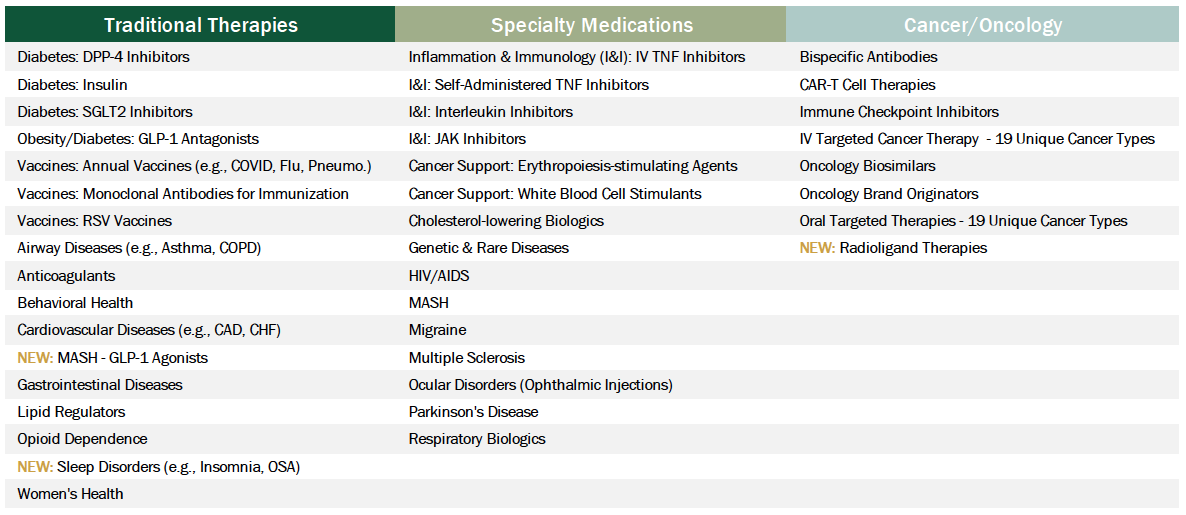
The commercial contracting environment continues to evolve as new pricing models, policy reforms, and medical benefit management reshape payer discussions across therapeutic areas. HIRC's report, The Contracting Environment in 2026, assists pharmaceutical manufacturers in understanding trends in contracting with commercial payers across 40 traditional, specialty, and oncology therapeutic categories. The report addresses the following questions:
- Which recent market trends have the potential to influence the contracting environment over the next 1-3 years?
- What is the status of contracts in-place or offered to commercial health plans in the last 12-18 months across 40 traditional, specialty, and oncologic therapeutic areas?
- What contract approaches are most common overall and by therapeutic area (e.g., flat access rebates, price protection, market share rebates)?
- What are the most common average discount/rebate amounts offered across 40 traditional, specialty, and oncologic therapeutic areas?
- What is the status of alternative or novel contracting approaches, such as risk/outcomes-based, portfolio, and indication-based contracts?
Key Finding: Commercial contracting in 2026 reflects an increasingly complex market environment, yet competition, rebate economics, and net cost remain the primary drivers of contracting decisions. The landscape continues to vary considerably by therapeutic area.
External Market Forces are Influencing Contracting Discussions. The contracting environment is increasingly shaped by external market forces that extend beyond competition alone. PBM reform, the Inflation Reduction Act, new pricing models, and increased focus on medical management are among the top trends that have the potential to influence the future contracting environment. Payers are considering these emerging market trends in contracting discussions, although their impact today is generally viewed as incremental rather than transformative.
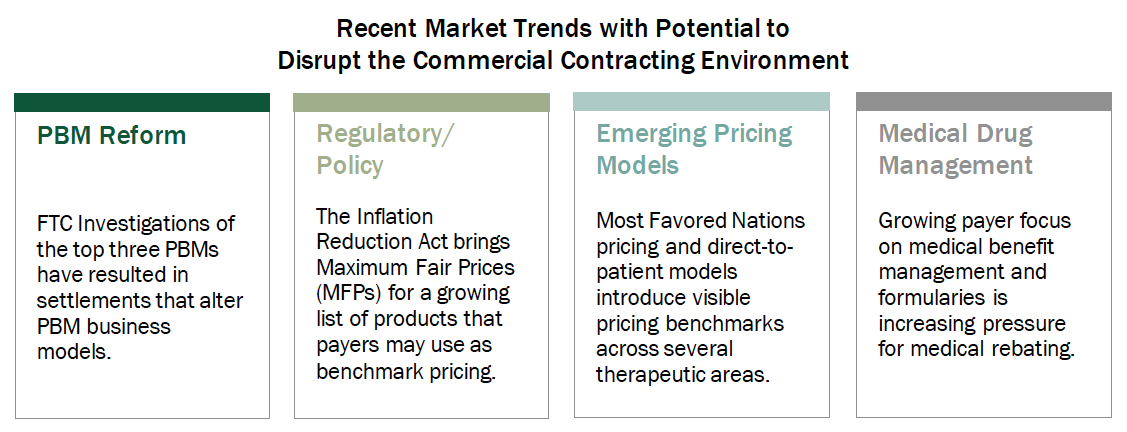
The full report provides the results of in-depth qualitative interviews with commercial payers to better understand perspectives and insights into these trends and their impact.
The Contracting Environment for Traditional Medications. The contracting environment varies by individual therapeutic market as channel, clinical, and reimbursement dynamics create distinct contracting landscapes across traditional, specialty, and oncology categories. Across traditional therapies, payer contracting leverage rises where competition enables formulary steering and falls where clinical or structural factors limit it. While vaccines and women’s health are competitive, they show limited payer contracting, likely because utilization is largely provider-driven or constrained by public health coverage requirements. Contracting is most common in diabetes, obesity, & airway diseases.
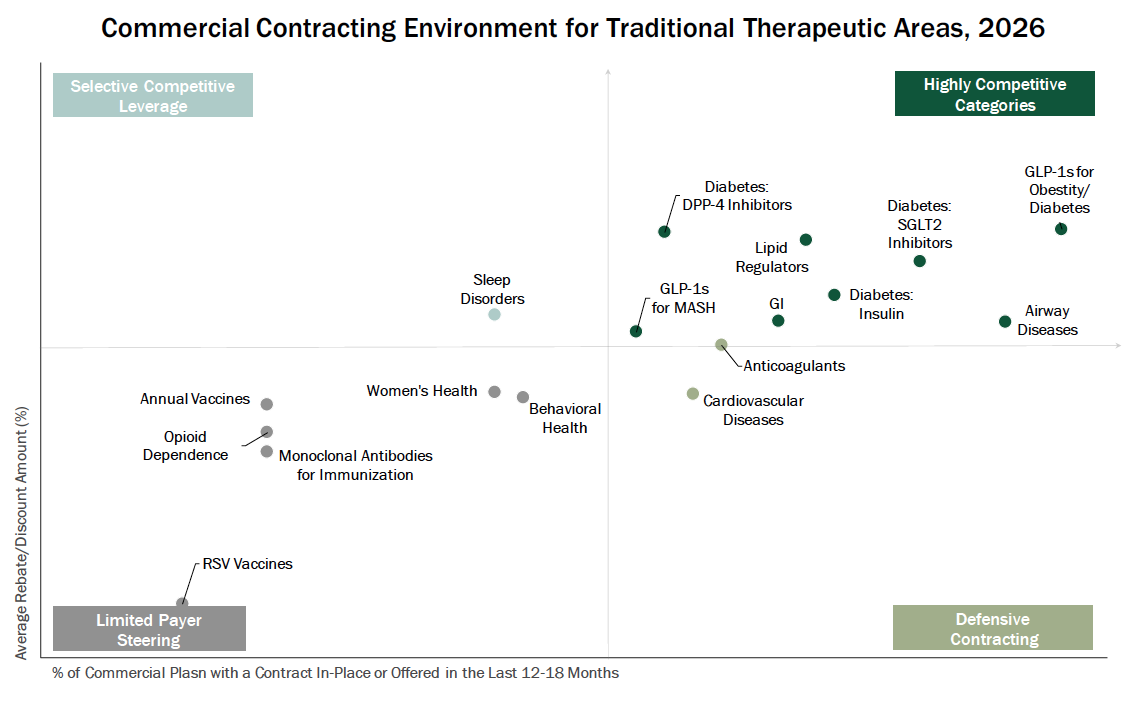
40 Therapeutic Areas are Examined. The complete report reviews contracting prevalence, approaches/types, and most common average rebate discount amounts across the following therapeutic areas/classes:
Research Methodology and Report Availability. Special reports draw upon study data across HIRC services, allowing readers to glean insights into high level topics across varying market segments, channels, and/or therapeutic areas. HIRC's report, The Contracting Environment in 2026, includes survey and qualitative follow-up interview insights from commercial health plans, collected in 2026. The report is available now to HIRC’s Special Report subscribers at www.hirc.com.
Download a PDF of these Highlights
Download Full Report (Subscribers only) >